Shooting film when my phone can't take pictures
My phone can't take a picture. For going on two years, that's been one of the best things about it.
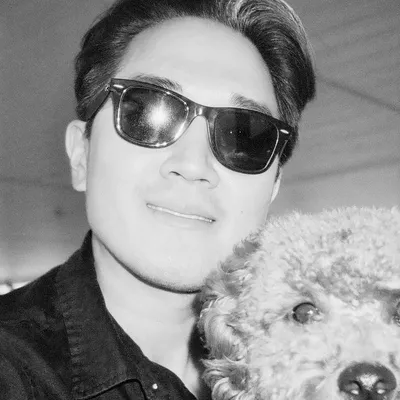
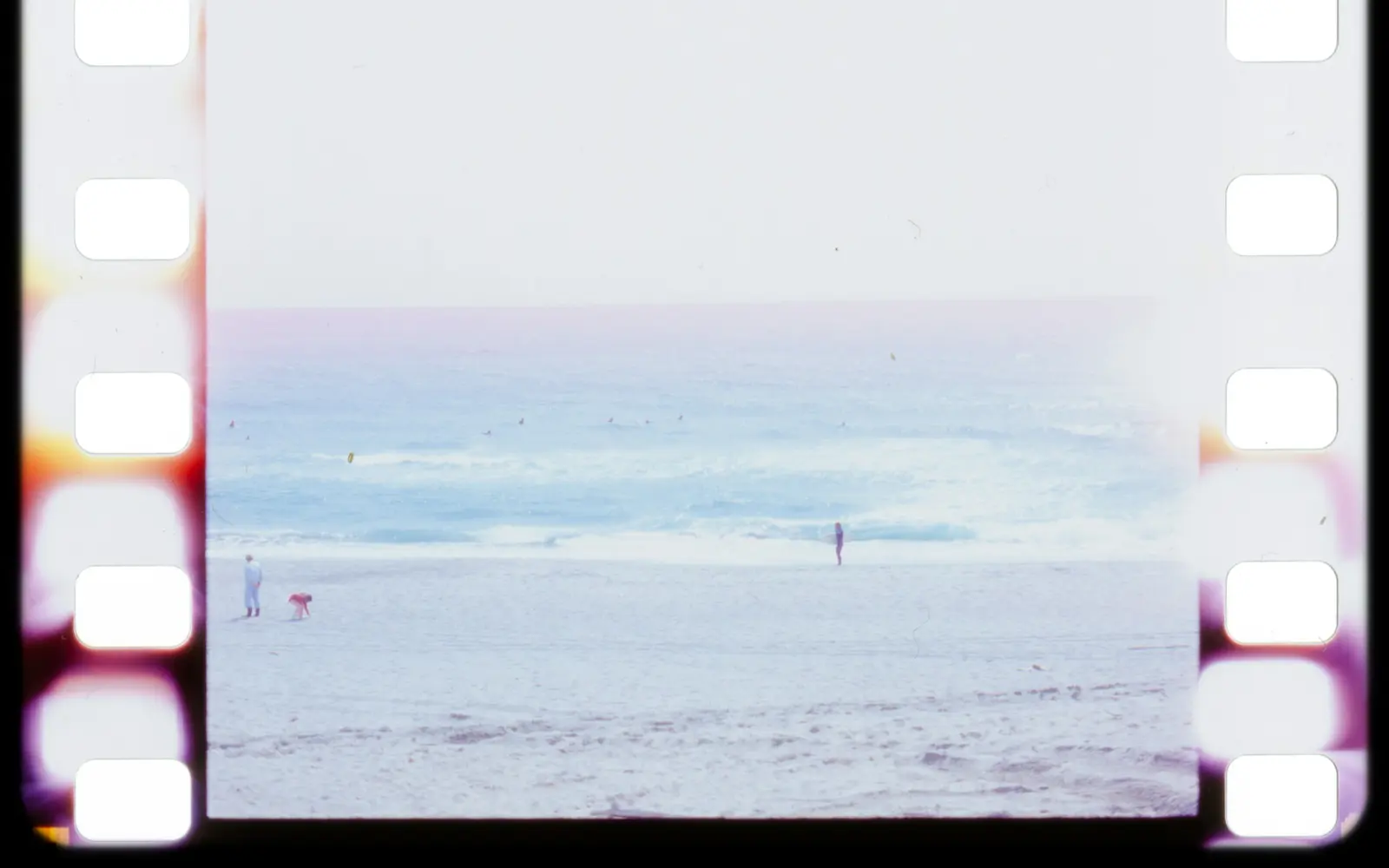
The Light Phone II has no camera. When I switched to it in 2022, that was the part I worried about most, because I had two small kids and a camera roll full of them. What happened instead is that I started shooting 35mm film on a Contax T2, about a roll a month, and I now take far fewer pictures of my kids and like a lot more of them.
That’s the whole post, if you’re in a hurry. The rest is why I think it worked, and what I’d tell someone who’s nervous about giving up the camera in their pocket.
The phone took the pictures, so I didn’t have to look
I switched phones because I noticed I was photographing my kids more than I was looking at them. I wrote about that in my first piece on all this, and it’s still the most honest reason I have.
The phone made the picture free, so I took it every time. Ten frames of the same moment, then a check of the screen to see if one was good, then a few more to be safe. By the time I looked up, the moment had moved on without me, and the ten frames went into a camera roll I almost never opened. A camera roll that size works more like a landfill than an album.
There’s a study that put a name to this. In Linda Henkel’s 2014 experiment, people on a guided museum tour remembered the objects they photographed less well than the ones they only looked at, details included. She called it the photo-taking-impairment effect. One wrinkle: when people zoomed in to photograph a specific part of an object, the effect went away, which suggests the problem is the camera standing in for attention, more than the camera itself.
That matched what I’d noticed at the kitchen table. The phone let me hand the remembering off to it, and I took the deal hundreds of times without thinking.
The Contax T2 and a roll a month
The camera I ended up with is a Contax T2, a small titanium point-and-shoot from the early nineties with a Zeiss 38mm lens. It fits in a jacket pocket. You point it and press the button. I carry it more than is reasonable, and yes, I know it’s a little pretentious.
I picked it because it’s small enough to go everywhere and simple enough that I don’t fiddle with settings. The lens is a very nice bonus. Any working point-and-shoot would teach the same lesson, and a disposable camera would teach it faster.
A 36-exposure roll lasts me about a month. That’s roughly how many pictures my phone used to take at one birthday party. So every frame costs something, and the cost does the editing up front. I watch, and if the moment is good enough I take one. Usually just one.
The part I didn’t expect is what happens right after. There’s no screen on the back of a film camera, so once I press the shutter there’s nothing to check and nothing to fix. I’m back in the room before the sound of the shutter is done.
The wait for scans is half of it
When a roll is finished I send it to a lab, and the scans come back days or weeks later. By then I’ve forgotten half of what’s on it. Opening that email is the best part of my month at a desk.
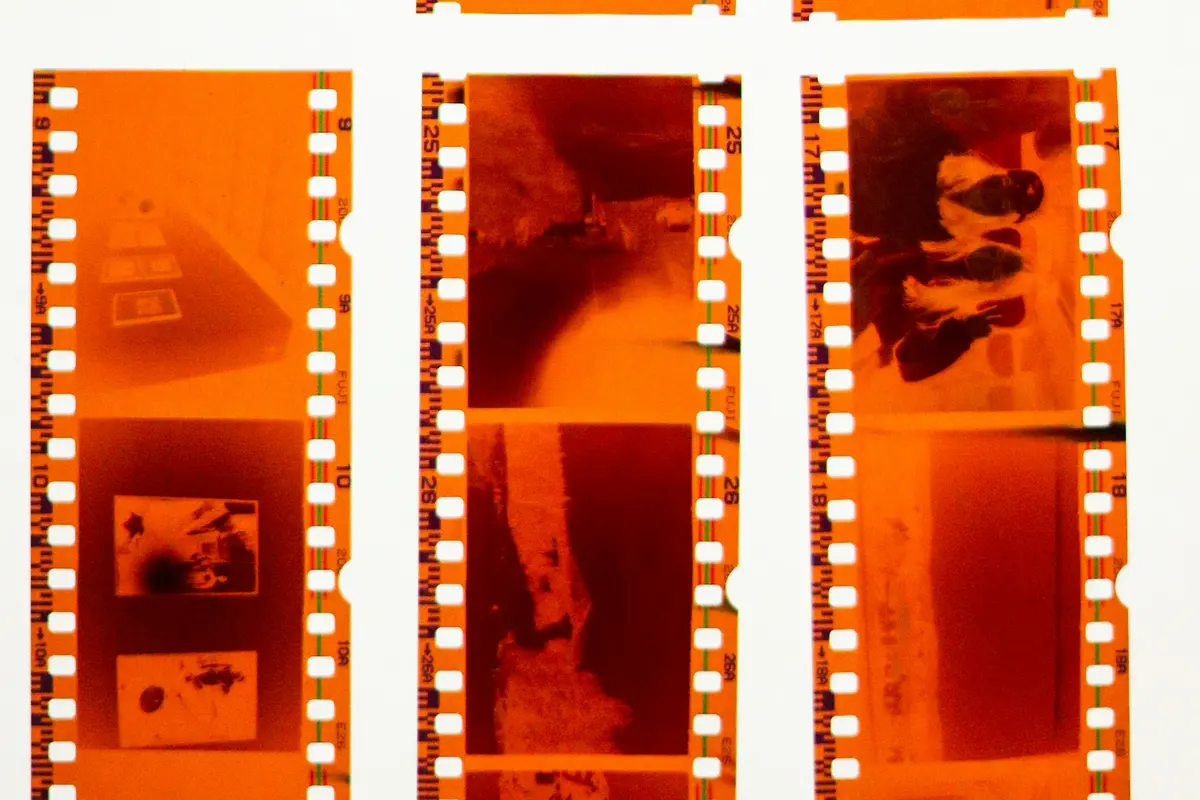
Some frames are bad. A few are out of focus, and a few have my thumb in the corner. I’ve made my peace with those. A miss on film reminds me I was there and paying attention, even if my timing wasn’t great, and the good frames hit harder because I’d stopped expecting them.
The waiting changes how I see the photos, too. A phone picture is done the second it exists. A film photo shows up weeks later, after the moment has had time to turn into a memory, so it lands as a small surprise from my own life. My kids are different by the time the scans arrive, sometimes by a lot. Seeing the gap is part of the pleasure.
Waiting used to be a thing I’d do anything to avoid. A year of being bored on purpose made it a lot easier, and film turned the wait into something I look forward to.
Fewer pictures of my kids, and better ones
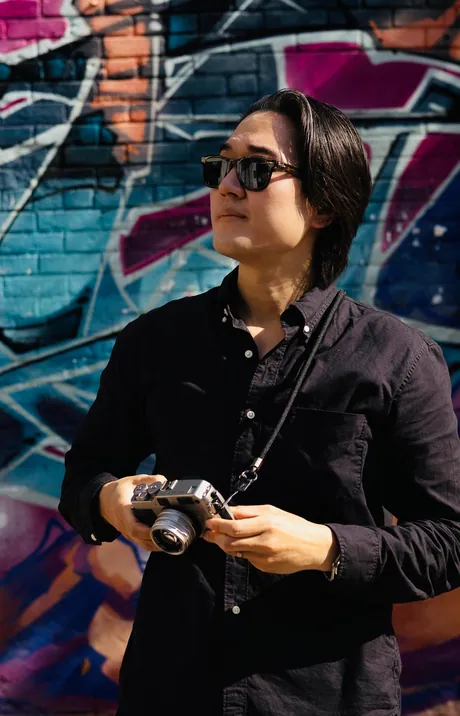
This is the part that matters to me. I take far fewer pictures of my kids than I did on the iPhone, and almost every one of them is a picture of something I watched happen first. The phone made it easy to take a picture in place of looking. Film makes me look first and then decide whether the moment is worth one of 36.
Most moments don’t get a frame, and that’s fine. My own childhood fits in a few albums, which was normal then, and it seems to have held up. The memories that stuck were the ones somebody was present for.
I won’t pretend there’s no cost. There are days something happens and the camera’s at home, and that one’s gone except for however I describe it at dinner. I’ve decided I can live with that. Before, I’d have had the picture and missed the thing.
The practical stuff I used to shoot with the phone, like where I parked or a receipt, mostly goes in a pocket notebook now. That works better than I expected, and the notebook has no opinion about what I should look at next.
If you’re nervous about losing the phone camera
Any camera that makes you stop before you shoot will do, Contax or not, along with a phone that can’t take the picture for you, or one you leave in a drawer for a weekend.
A few things I’d tell a friend:
- Pick a camera you’ll carry. A heavy camera stays home, and the funny thing happens while it’s there.
- Shoot fewer frames than you want to. The limit is the point.
- Don’t look at anything for a few weeks. Let the roll finish and let the lab take its time.
- Keep a notebook for the pictures that were really notes.
If you want a phone without a camera at all, the database can show you the ones that leave it out on purpose. I wrote more about living with mine in a year with the Light Phone II, and the things to do page has photography on it, on film or off.
A camera roll remembers everything for you. A roll of film asks you to remember most of it yourself, and keeps 36 of them as proof.
Read next
-
Essays
Offline is the new luxury
Phone-free clubs, Yondr pouches, detox resorts and pricey minimalist phones made being unreachable a status symbol. Who can afford it, and the cheap version.
-
Essays
Why people are going analog again
Vinyl, film, paper planners, old digital cameras and flip phones are back. What the numbers say, the Brooklyn Luddite Club, and how much of it is marketing.
-

Essays
In praise of boredom
A year after trading my iPhone for a Light Phone II: runs with no music, waiting rooms with nothing to look at, and what showed up once there was room.