What my kids see when I pick up my phone
From three feet down, a parent on a phone looks a lot like a parent who left the room.


When I look at my phone, what my kids see is the top of my head. A thumb moving, a face that has stopped doing anything, and a dad who answers to his name a few seconds late, if he answers at all.
That’s about all a small kid can see. From three feet down, an urgent email and a weather check and a headline I didn’t need all look identical: Dad is right here, and Dad is somewhere else. My son is about five and my daughter is about three. Neither of them can read the screen, and it wouldn’t change anything if they could.
I was photographing them more than I was looking at them
I switched to a dumbphone in 2022, and what pushed me was the camera. My son was two and my daughter was brand new, and I had turned into someone who documented everything. Something good would happen and the phone would be up before I’d decided to lift it. Then I’d check the shot. Then, since the phone was out anyway, I’d check one other thing. By the time I looked up, the good thing was over, and I had a picture of it I would never open again.
There’s a small experiment that describes this a little too well. In a paper published in 2014, the psychologist Linda Henkel walked undergraduates through a campus art museum and had them photograph some objects and simply look at others. Tested the next day, they were worse at recognizing the objects they had photographed and remembered fewer of their details. In a second round, zooming in on one part of an object seemed to protect the memory, which is its own lesson about paying attention on purpose.
It was a museum and a few dozen students, so I don’t lean on it too hard. It’s still the closest thing I’ve found to an explanation of why I had a phone full of pictures from my kids’ first two years and a fuzzier memory of those years than I wanted.

Researchers call it technoference
The word for a phone or a screen getting between a parent and a kid is technoference, and the study I keep coming back to is McDaniel and Radesky, 2018. They followed 183 couples with a child under six for six months, checking in four times, and asked how often phones and other screens interrupted their time with their kid. Parents who reported more interruptions tended to report more acting out from their child later on. It ran the other way too: a child with harder behavior went with more parenting stress, and more stress went with more reaching for the phone.
That two-way part felt true to me. A tired parent with a kid who is melting down picks up the phone for a minute of relief, the kid notices the parent is gone, and it goes around again.
The caveats matter here. It’s a small sample, mostly white and well educated, every measure came from the parents themselves, and the effects were modest. It shows an association and can’t say which way the cause runs, or whether there is one. It sits on the research page with the other studies on young kids, caveats and all.
A second study gets closer to the view from three feet down. In a 2018 experiment, 50 mothers played with their babies, aged about seven months to two years, and then for a stretch looked at a phone and stopped responding. The babies got upset, which is what babies do when a parent goes blank. The babies of mothers who said they used their phones more in everyday life explored the room less and showed less positive emotion during that blank stretch, and they recovered less well once their mothers came back. Fifty babies is small, and the everyday phone use was self-reported, so this is another association. It was also hard to read without thinking about my kitchen at dinnertime.
Kids copy the person holding the phone
Small kids copy everything, posture included. So I’ve stopped thinking of the phone question as something that starts the day they get one. It started when they were old enough to watch me use mine.
Neither of them has a phone, and they won’t for a long while. I think about it already anyway. When my son is twelve and wants one, I’d like to be able to tell him the phone can wait, and I’d like that to be something he has watched me do for years, rather than a rule I came up with the week he asked.
The phone got boring and my head came back up
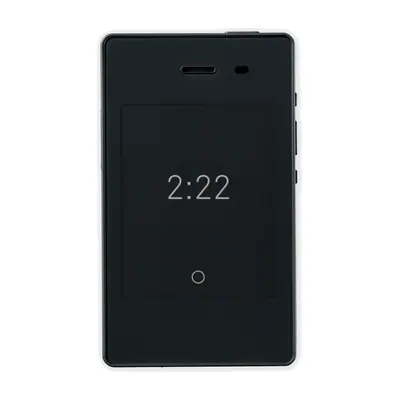
The Light Phone II I switched to has no camera at all, which was half the point. I wrote about the switch at the time, and about the strange first weeks of having nothing to look at.
The pictures moved to a Contax T2, a 35mm point-and-shoot. A roll lasts me about a month, so every frame costs something and I take fewer of them. I take the picture, put the camera down and stay in the room, and I don’t check anything, because there’s nothing on the back of the camera to check. I wrote more about that in shooting film without a phone camera.
The phone still comes out. Someone calls, a text about pickup comes in. The difference is that there’s nothing on it to get lost in, so a check takes ten seconds and my head comes back up. I still spend all day at a computer for work, and I still drift.
If a different phone isn’t on the table for you, the free steps on the alternatives page help, and the cheapest one works fine: put the phone in another room while the kids are awake and leave it there for an evening.
When they say my name now, I hear it the first time on most days. That’s the only measure I use.
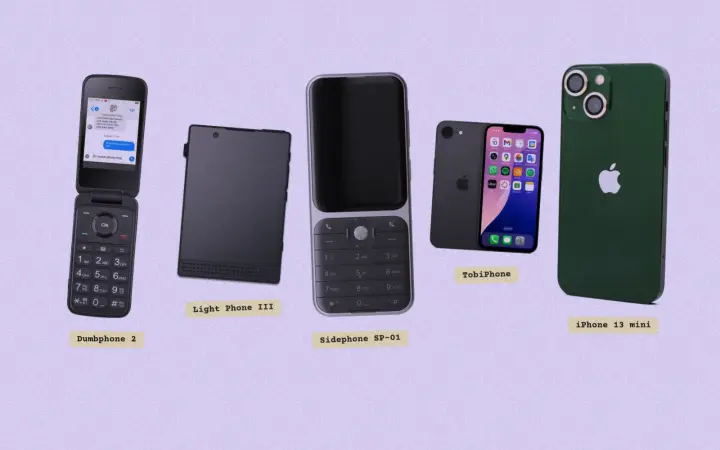
The phones in this post
Read next
-

Kids and family
New York's phone-free schools law, from a Buffalo parent
New York public schools now keep smartphones away bell to bell. What the law covers, what's exempt, where basic phones fit, and what the research says.
-
Kids and family
A first phone for a teenager
A first phone for a 13 to 17 year old: the group chat problem, phones a teen will carry, the flip-and-laptop setup, and a family agreement worth writing down.
-

Phones
Small phones for writers, photographers, musicians and designers
Which small phones suit writers, photographers, musicians and visual artists, from e-ink and keyboards to no camera at all, with prices as of November 2026.