The best first phone for a kid
My kids are six and four, so this is the list I'm keeping for later. The first thing on it doesn't go in a pocket at all.

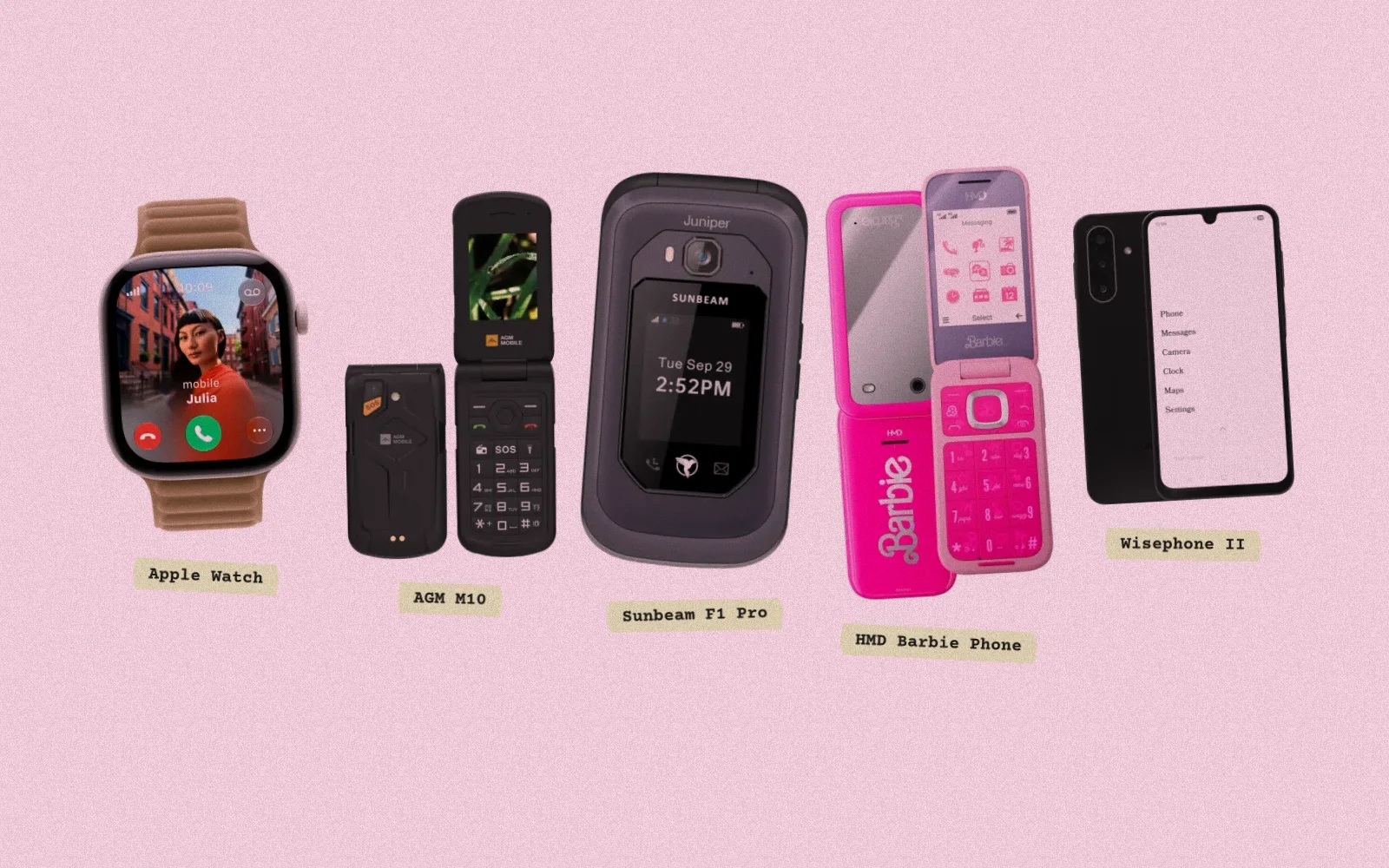
The short version
- For a kid of 8 to 12 who mostly wants to call friends, a home phone like Tin Can, about $100 with a $9.99 monthly plan for regular numbers, is the simplest first phone.
- For a kid who walks places alone, a basic flip with no browser, like the AGM M10 at $69 on T-Mobile, covers calls and texts without the internet.
- If you want a flip that texts, blocks the rest on purpose and works on all three US carriers, the Sunbeam F1 Pro at $359 is the one I'd buy.
- Locked-down smartphones like the Wisephone II and TobiPhone work, but they carry monthly fees and are better saved for the teenage years.
The best first phone for most kids between 8 and 12 is the one that does the least while still covering the reason you’re buying it. For a kid who mostly wants to call friends after school, that’s a home phone like Tin Can, about $100. For a kid who walks or bikes places alone, it’s a basic flip with no browser, like the AGM M10 at $69, or a cellular Apple Watch at $299 plus a line. If you want a flip that texts and blocks everything else on purpose, the Sunbeam F1 Pro at $359 is the one I’d buy.
I’d hold off on anything shaped like a smartphone, even a locked-down one, until the teenage years. Teenagers are their own problem, and they get their own post next week.
My kids are about six and four, and neither has a phone. This is the list I’m keeping for when one of them asks, in order of how little each option does. Prices are as of October 2026.
Decide what the phone is for first
Before you look at a single phone, write down the one or two jobs it has to do. “Call me when practice ends” is one. “Let me know where she is” is another. Each has a different cheapest answer, and almost none of them needs the internet.
The internet is the part that turns a phone into somewhere to go. A first phone that can’t get there is a lot easier to hand over, and a lot easier to take back if it isn’t working.
Quick picks
| Phone | Best for | Price (Oct 2026) | The catch |
|---|---|---|---|
| Tin Can | Calling friends from home | About $100, plus $9.99/mo for regular numbers | Stays home, needs Wi-Fi |
| Apple Watch SE 3, cellular | A kid who walks places alone | $299, plus a watch line | Needs a parent’s iPhone to set up |
| AGM M10 | A first flip that can’t get online | $69 | T-Mobile only |
| Sunbeam F1 Pro | A flip that texts and blocks the rest | $359 | The price |
| Wisephone II | An older kid who needs a few apps | $399, plus $39 and $14.99/mo | The subscription |
| TobiPhone | A family that runs on iMessage | $775, plus $18/mo | The cost |
A phone that stays home
Tin Can, for a kid who wants to call friends
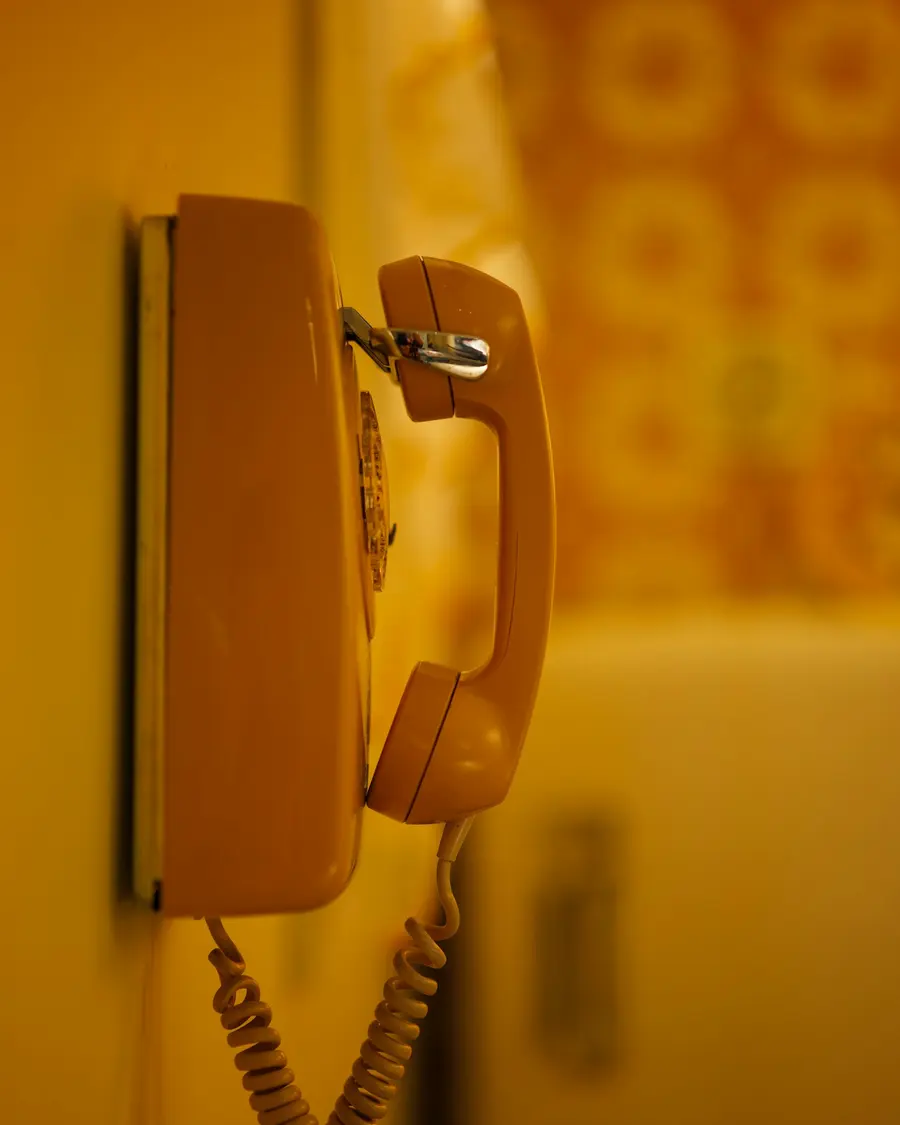
Tin Can is a landline for kids, made by a company in Seattle. It plugs into a wall outlet and connects over Wi-Fi, so you don’t need a phone jack. On the free plan it calls other Tin Cans and emergency services. The $9.99 Party Line plan adds calls to regular phone numbers, a parent’s cell or a grandparent’s landline. Parents approve every contact and set the hours when it rings.
It’s been a hit. Bloomberg reported this spring that hundreds of thousands have sold since it launched in April 2025, at about $100 each. Pinwheel, which makes phones and watches for kids, launched its own version in July at $68 or $79, with calls to regular numbers from $6.99 a month.
The catch is the catch of every landline: it lives in the kitchen. For an eight-year-old, that’s most of the appeal. Calls happen where a parent can half hear them, and the phone can’t follow anyone to bed. Tin Can isn’t in the database, because it isn’t a mobile phone.
A watch that calls
Apple Watch SE 3 with cellular, for a kid who walks places alone
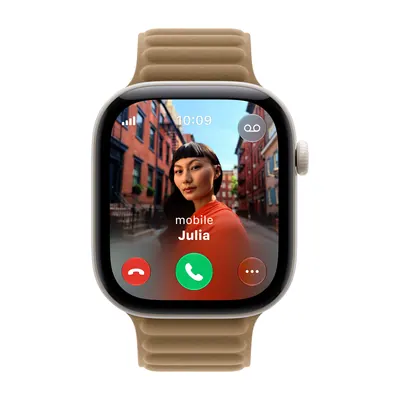
A cellular watch is the next step up, and the Apple Watch is the one in the database. The SE 3 with cellular is $299 at 40mm and $329 at 44mm, plus a watch line that runs roughly $6.50 to $20 a month. Set up through Apple Watch For Your Kids, it gets its own number and account.
There’s no browser and no camera, and it’s hard to lose something strapped to a wrist. It does have an App Store, so it’s less of a sealed box than it looks, and it’s worth checking what’s on it.
The catch is that it’s an answer for iPhone families. It needs a parent’s iPhone to set it up, and For Your Kids works only on certain carriers. In the US that’s AT&T, BetterRoaming, Boost Mobile, Cellcom, C Spire, Cricket Wireless, T-Mobile, UScellular, Verizon and Xfinity Mobile, and prepaid and some older accounts aren’t supported. I haven’t lived with one.
A basic flip or keypad phone
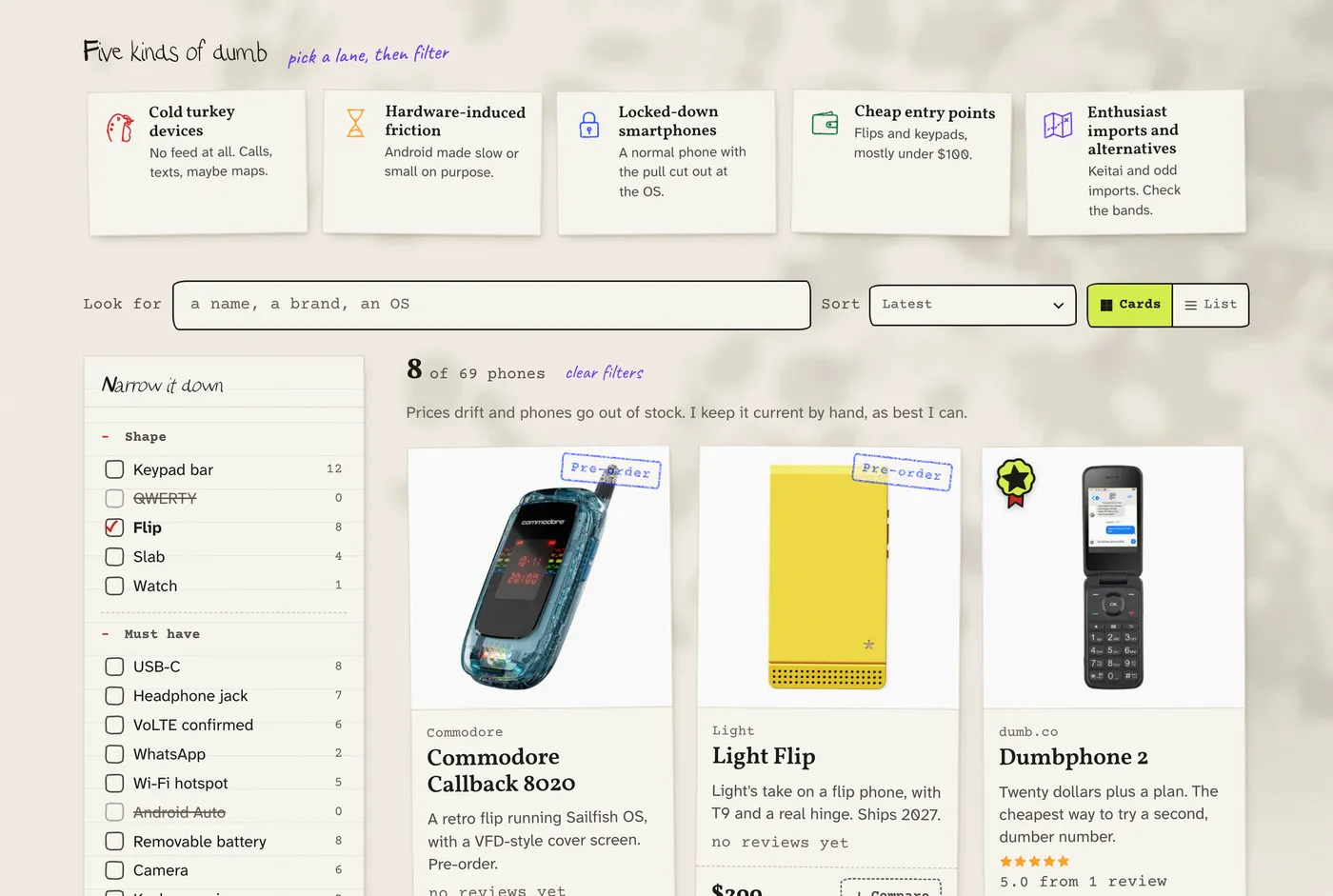
This is the classic first phone, and the trap here is the browser. A lot of cheap flips have one. The TCL Flip 4 5G, $99.99 at Metro, ships with a browser, Google search and YouTube, which is a fair amount of the internet for a phone that looks like it’s from 2005. The database can show you just the flips with no browser.
AGM M10, for a first flip that can’t get online
If the whole point is a flip that can’t get online, start with the AGM M10, a small rugged flip with no browser, no email and no apps to install. It’s $69 direct from AGM, $59 at Dumb Wireless and $89 with a charging dock. It has a dedicated SOS key, a notification light on the lid, a camera, a removable battery, a headphone jack and an IP68 rating, which matters more for a ten-year-old than for most adults.
I haven’t lived with this one, and the trade-offs are real. In the US it’s sold as T-Mobile only, and it works on T-Mobile’s sub-carriers. AGM says a brand-new SIM has to be activated in another phone first, and it publishes no band table. Whether it does group texts is unknown in the database.
AGM M8 Flip, for a kid who never hears it ring
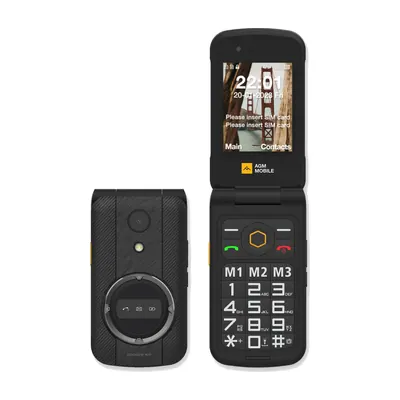
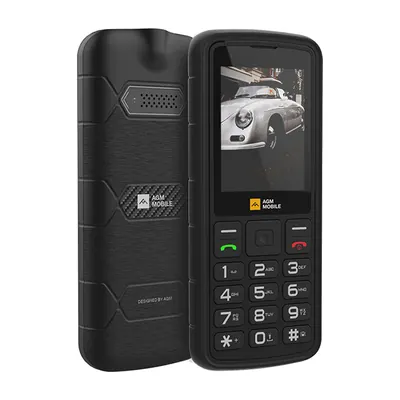
AGM’s louder model, the AGM M8 Flip, is built around a 104dB speaker and an SOS key. AGM says plainly that there’s no browser and apps can’t be installed. It’s $79 on AGM’s store, or $99 with the dock, and AGM only vouches for T-Mobile and the carriers that run on it. A separate Security+ version drops the camera, the SD slot and picture messages, if you’d rather have none of those. And if a flip seems fussy, the AGM M9 is a $49 keypad bar with no browser, also sold in the US as T-Mobile only.
Nokia 2780 Flip, if you’re on Verizon and buying secondhand
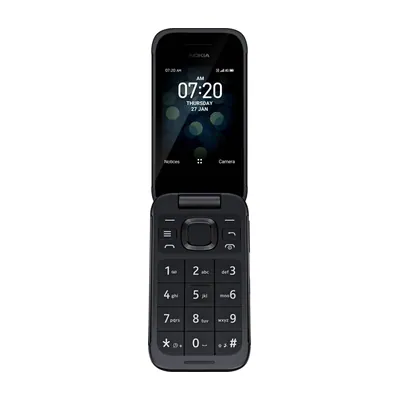
For years the Nokia 2780 Flip was the default US flip. It works on AT&T, T-Mobile and Verizon, has VoLTE and a removable battery, and launched at $89.99. HMD has since dropped it, so it’s open-box or secondhand now. It also has a web browser with a real address bar, an email app and a small app store, so it’s a basic phone with a door left open. On Verizon, the flip with no browser is the Sunbeam below.
HMD Barbie Phone, if you check the model number
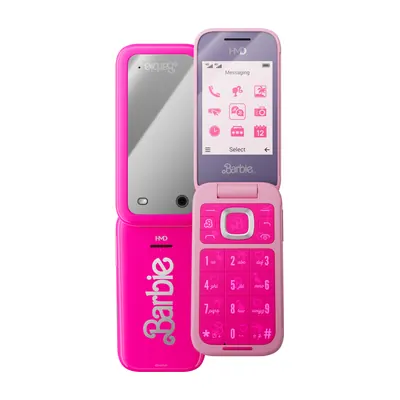
Pink, with stickers and a beaded strap, the HMD Barbie Phone will settle the argument for some eight-year-olds. Two different phones share the name. The international one is a restyled Nokia with no Wi-Fi and no browser. The US one is different hardware on KaiOS, with Wi-Fi, a browser and email. It launched at $129, and in the US it’s down to Amazon and eBay now. Check the model number before you buy.
A flip that’s locked down on purpose
Sunbeam F1 Pro, the one I’d buy
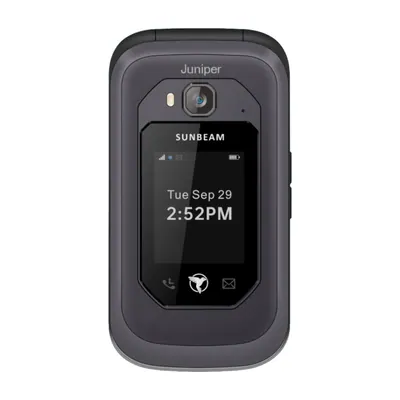
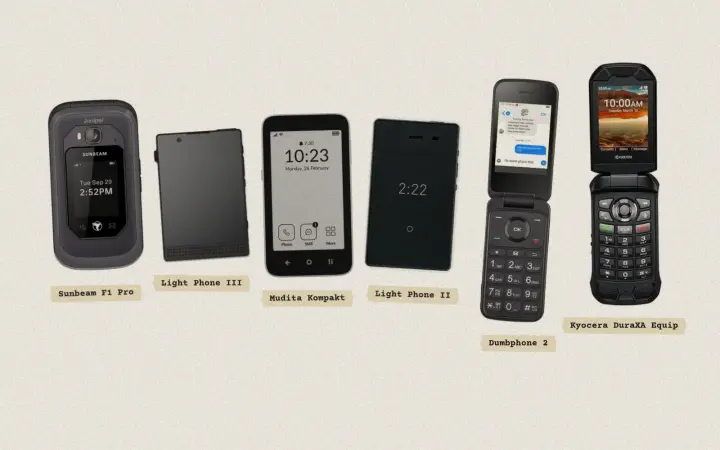
What sets the Sunbeam F1 Pro apart is its 13 software builds, which differ only in what’s switched on. Oak has no media and no camera. Willow is calls and texts. Eight of the builds also block calls and texts to AI numbers. You pick the build when you buy it, so the decision about what the phone can do is made once, by a parent, instead of every day by a kid.
It works on Verizon, AT&T and T-Mobile and most of their sub-carriers, though Sunbeam’s own table marks Safelink, Spectrum, Visible, Xfinity and US Cellular as not working. It has group texts, a removable battery and a headphone jack. It’s $359 direct for most builds and $389 for the two with text-only email, and units bought after July 1, 2026, come with a two-year warranty.
The one gap worth knowing about is the hotspot, which isn’t filtered. I carried its cheaper sibling, the F1 Horizon, for a while, and liked the idea enough to put the Pro at the top of my own list for later.
The smartphone-shaped ones can wait
These are real smartphones with the distracting parts held shut by software, and in two cases by a monthly fee. They make sense for a teenager who needs WhatsApp for a team or a ride app for a job. For a nine-year-old, I’d start with something that can’t get online at all and work up from there.
Wisephone II, for an older kid who needs a few apps
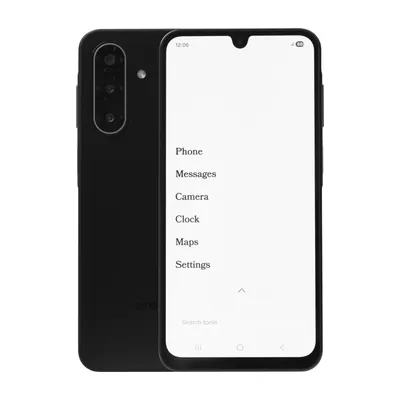
Techless builds the Wisephone II on a Samsung Galaxy running its own WiseOS, with no browser and no email but with WhatsApp, Spotify, Waze and Uber from a curated set. It’s $399, plus a one-time $39 activation fee, plus a required $14.99 a month. Let the subscription lapse and the phone drops to emergency calls and texts, and after 90 days Techless wipes it.
TobiPhone, for a family that runs on iMessage
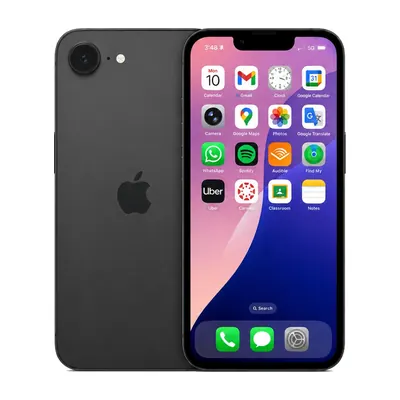
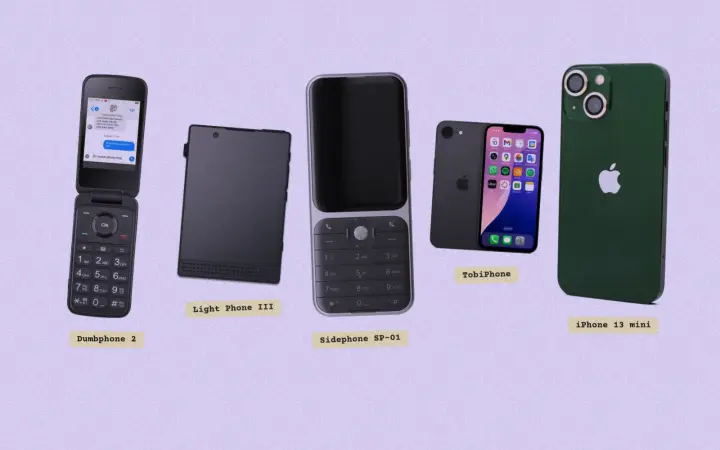
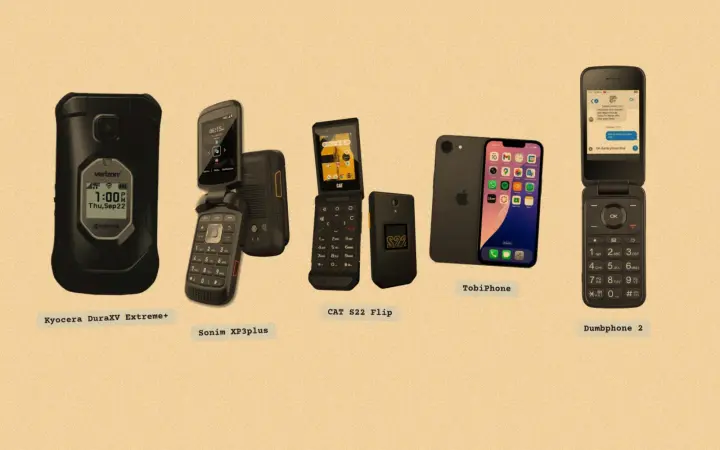
Tobi takes an ordinary iPhone and manages it for you. On the TobiPhone, iMessage and FaceTime stay, and the App Store and the browser go. Apps outside the installed set get added after a conversation about the trade-off. It’s $775 to set up on the iPhone 17e tier, plus $18 a month, and wireless service isn’t included. Tobi no longer takes an iPhone you already own. Tobi owns the phone while the membership runs, and cancelling leaves it yours, unlocked.
The Balance Phone, which locks a Galaxy at the system level, isn’t sold in the US at all. The Balance Phone Pro is, at $817, which is a lot of phone for a ten-year-old.
What I’d do, for now
If one of mine asked tomorrow, I’d put a Tin Can on the kitchen counter and leave it there for a few years. When they start walking places on their own, a flip with no browser: the AGM M10 on T-Mobile, the Sunbeam F1 Pro on anything else. The carrier question has its own guide, and the best flip phones of 2026 covers the flips I didn’t get to here.
The phone is the easy part. The hard part is being the only family in the grade that waited, which is why I think the most useful thing you can do is find a few other parents and pick an age together. And if you’re in New York, the school day is already covered: the state keeps smartphones away bell to bell, and a phone that can’t get online is outside that rule.
Questions people ask
- What is the best first phone for a 10-year-old?
- For most 10-year-olds, a basic flip with no web browser covers calls and texts without the internet. The AGM M10 is $69 and runs on T-Mobile, and on Verizon or AT&T the Sunbeam F1 Pro, at $359 as of October 2026, does the same job with a menu of locked-down software builds. If the kid only needs to call friends, a home phone like Tin Can is the cheaper start.
- Is a smartwatch better than a phone for a kid?
- For a kid who walks places alone, a cellular watch is small, hard to lose and has no browser. The Apple Watch SE 3 with cellular is $299 at 40mm plus a watch line of roughly $6.50 to $20 a month, and Apple Watch For Your Kids gives it its own number. It needs a parent's iPhone to set up and works only on certain carriers.
- How does Tin Can work?
- Tin Can is a landline-style phone for kids that plugs into the wall and connects over Wi-Fi. Calls to other Tin Cans and to emergency services are free, and a $9.99 monthly plan adds calls to regular phone numbers. Parents approve every contact and can set the hours when it rings.
- Do flip phones for kids have internet?
- Many do. The Nokia 2780 Flip and the US version of the HMD Barbie Phone both have a web browser, and the TCL Flip 4 5G comes with YouTube. The AGM M10 and AGM M8 Flip have no browser at all, and the phone database can filter for flips without one.
- What age should a kid get a smartphone?
- The research doesn't settle on a number. Wait Until 8th asks families to hold off until the end of eighth grade, and Jonathan Haidt suggests basic phones until high school and no social media before 16. Whatever age you pick, it's far easier to hold if a few other families at the same school pick it too.
The phones in this post
compare them side by side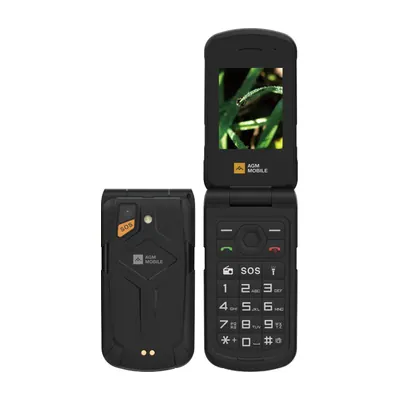
Read next
-
Kids and family
A first phone for a teenager
A first phone for a 13 to 17 year old: the group chat problem, phones a teen will carry, the flip-and-laptop setup, and a family agreement worth writing down.
-
Phones
The best dumbphones of 2026
The best dumbphones of 2026 by need, from a $49 keypad phone to the $899 Light Phone III, checked by hand and picked by someone who's lived with eight of them.
-
Work
The right small phone for your job
Which small phone fits your job, from rugged flips for job sites to locked-down smartphones for sales, and why gig work is the one job a dumbphone can't do.