Waiting until eighth grade works better in a group
Saying no to a smartphone is hard when your kid would be the only one without. It gets a lot easier at ten families.


The short version
- A parent pact helps because the hardest part of waiting on a smartphone is being the only family, and a pact makes sure your kid has company.
- Wait Until 8th asks parents not to give their child a smartphone until at least the end of eighth grade, and the pledge only activates once 10 families in the same grade at the same school have signed.
- Basic phones and smartwatches that only call and text are allowed under Wait Until 8th, so a kid can still be reachable.
- To start one, find a second parent, write the rule in one sentence, invite the rest of the grade, and agree on how the kids will reach each other instead.
A parent pact is a few families at the same school agreeing to hold off on smartphones together, so that no kid ends up the only one without. The best known in the US is Wait Until 8th. Parents promise not to give their child a smartphone until at least the end of eighth grade, and the promise only switches on once ten families from the same grade at the same school have signed. Basic phones and watches that call and text are allowed.
I think pacts work for a plain reason. The hardest part of waiting is being the only family doing it, and a pact is a way to make sure you aren’t.
My kids are about six and four, and neither has a phone. Eighth grade is most of a decade away for my son. I’m thinking about it now on purpose, because the parents I’d want in a pact are the ones I’m meeting at drop-off this year, and it’s a much easier conversation before anyone has bought anything.
Being the only family is the hard part
I don’t think most parents need convincing that an unlimited smartphone at eleven is a lot. What gets them is the cost to the kid: plans get made in a group chat, and the kid without a phone hears about them on Monday.
That puts every family in the same bind. Each one would rather wait, but nobody wants their kid to be the one who waited alone, so families give in one at a time and the age creeps down a little each year. It’s a coordination problem, and coordination problems get solved by coordinating.
Jonathan Haidt makes the same point in the one-page summary of his four norms: “It is often hard for one family to swim against the tide of ever-increasing screen time, but if we act together we turn the tide.”
How Wait Until 8th works
Wait Until 8th started in the spring of 2017, when Brooke Shannon and a few other parents in Austin, Texas, launched the pledge. The mechanics haven’t changed much since:
- You sign the pledge online for your child’s school and grade.
- It stays inactive until at least 10 families from that grade at that school have signed.
- Once it’s active, you get a list of the other families in the grade and their parents’ email addresses.
- A basic phone or a smartwatch that only calls and texts is allowed.
Wait Until 8th said in a post last June that more than 115,000 families had signed. Nobody enforces it. The power is in the list of names, which tells you exactly who else is in.
Smartphone Free Childhood is the British version
In the UK the same idea took off in early 2024. Daisy Greenwell and her friend Clare Fernyhough were both worried about their eight-year-old daughters and set up a WhatsApp group to talk it over. (It started in a WhatsApp group. I’m obliged to point that out.) Greenwell then posted on Instagram suggesting parents hold off on smartphones together, and by her account the group went from three members to more than 1,000 within hours. SBS has the longer story.
Their Parent Pact asks families to delay smartphones until at least 14 and social media until 16, and the Smartphone Free Childhood site shows how many families near you have signed.
The four norms in The Anxious Generation
The Anxious Generation, Jonathan Haidt’s 2024 book, ends with four norms he’d like families and schools to adopt:
- No smartphones before high school. Basic phones, with limited apps and no browser, until ninth grade, which is roughly 14.
- No social media before 16.
- Phone-free schools from elementary through high school, with phones, smartwatches and anything else that can send or receive texts stored in lockers or locked pouches all day.
- Far more independence, free play and responsibility in the real world.
The third is stricter than New York’s law, which I wrote about in September. The state lets basic phones through, and Haidt’s version keeps them in the locker too.
The fourth is the one I think about most with a six-year-old. It’s also the one a pact helps with most, since a kid walking to a friend’s house alone is a lot less unusual when three other families let theirs do it too.
Researchers still argue over how much of the rise in teen anxiety and depression Haidt’s story explains. The research page has both sides, and Candice Odgers’ piece in Nature is the strongest pushback I’ve read. I don’t think a pact needs the strongest version of his argument to be worth doing. Waiting costs a kid very little when their friends are waiting too.
How to start one at your kid’s school
- Find one other parent first. Ask out loud at pickup rather than in a group text. It’s the same advice as the club guide: two people is already a club, and two families is already a pact.
- Write the rule in one sentence. “No smartphone until the end of eighth grade, and a basic phone or a watch is fine” is a complete pact. Decide what the kids will use instead, because “nothing” makes the hard part harder.
- Invite the rest of the grade. A coffee after drop-off works, or a table at a school event if the school is friendly. Wait Until 8th’s own advice is to keep it about support and to sign something early, since parents join faster once a few names are on the list.
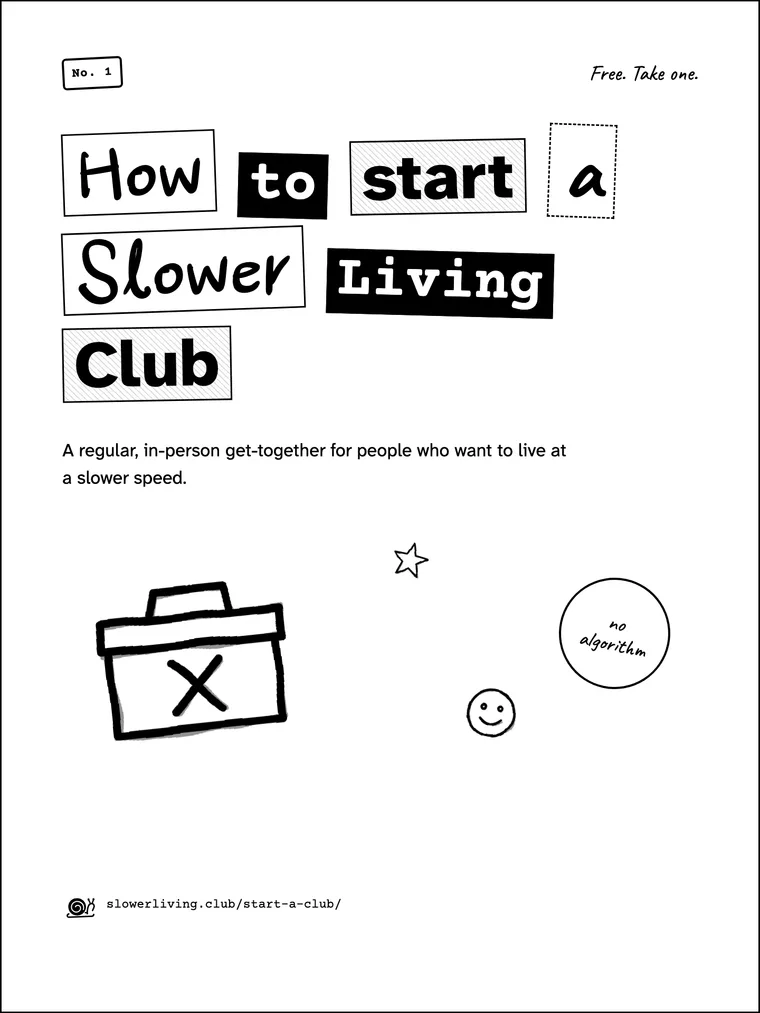
- Sign something. In the US the Wait Until 8th pledge does the bookkeeping for you. A sheet of paper with names and email addresses works too, and the flyer on the printables page was made for a club, but its tear-off tabs work fine for parents who want to wait.
- Sort out how the kids will reach each other. A home phone and a family email address cover most of it in the early grades, and a basic phone that texts covers the rest later. If the parents’ own group chat is the sticking point, I wrote about keeping the group chat on a small phone.
- Check in once a year. New families arrive and kids change schools, and somebody has to say hello to them and explain what the pact is.
What I’d say at the first coffee
Not everyone will sign, and that’s fine. You need enough families that your kid isn’t alone, and ten is the number Wait Until 8th settled on.
Leave the other families alone. A pact that starts grading the parents who didn’t sign won’t last, and it’ll make the next conversation harder.
And it helps if the parents running the meeting aren’t scrolling through it. I say that as someone who had to work on it.
I don’t know yet which parents at my son’s school will want to do this. I’d rather find out while he’s six than when he’s in sixth grade.
Questions people ask
- How does the Wait Until 8th pledge work?
- Parents sign an online pledge not to give their child a smartphone until at least the end of eighth grade. It only becomes active once at least 10 families from the same grade at the same school have signed, and then the families get a list of everyone else in the grade with their email addresses. Nobody enforces it, and the list of names is most of its power.
- Can a child have any phone under Wait Until 8th?
- Yes. The pledge covers smartphones, and Wait Until 8th says a basic phone or a smartwatch used only to call and text is fine. That keeps a kid reachable for pickups and walks home without handing them the whole internet.
- What is the Smartphone Free Childhood Parent Pact?
- It's the UK version of the same idea, which started in early 2024 as a WhatsApp group between two mothers worried about their eight-year-old daughters. Families who sign agree to delay smartphones until at least 14 and social media until 16, and the group's site shows how many families near you have signed.
- What are the four norms in The Anxious Generation?
- Jonathan Haidt proposes no smartphones before high school, no social media before 16, phone-free schools from elementary through high school, and far more independence, free play and responsibility in the real world. He argues they are hard for one family to hold alone and much easier when families act together.
- What if other parents at my school won't sign?
- You don't need everyone. Wait Until 8th activates at 10 families per grade, and even a handful means your kid isn't the only one without a smartphone. Stay friendly toward the families who say no, because a pact that starts grading other parents doesn't last.
Read next
-
Kids and family
The best first phone for a kid
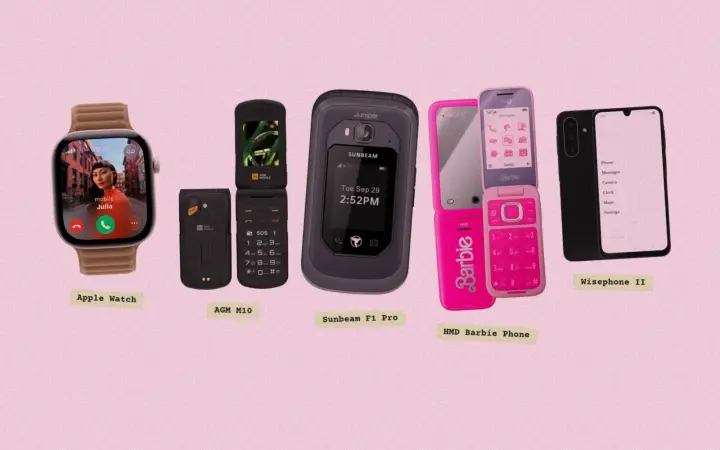
The best first phone for a kid of 8 to 12, in order of how little it does: a kids' landline, a cellular watch, a basic flip, then a locked-down phone.
-

Kids and family
New York's phone-free schools law, from a Buffalo parent
New York public schools now keep smartphones away bell to bell. What the law covers, what's exempt, where basic phones fit, and what the research says.
-

Kids and family
What my kids see when I pick up my phone
A dad of two on what a small kid sees when a parent looks at a phone, why I stopped photographing my kids so much, and what the research on technoference says.