Light Phone III or Light Phone II?
One costs about five times the other. That settles it for most people, and the rest is about a camera.

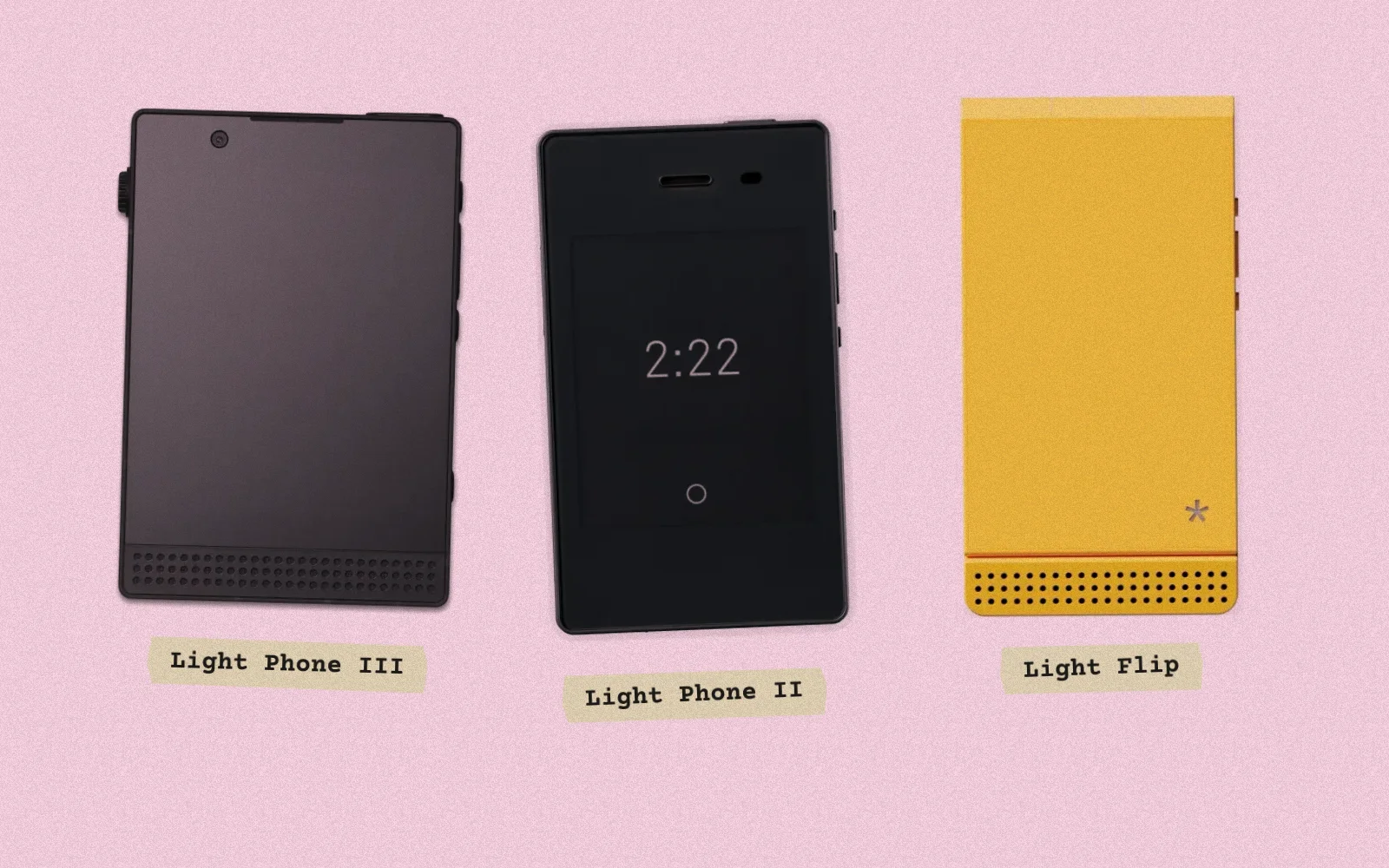
The short version
- For most people the Light Phone II is the better buy, at $175 refurbished from Light, as long as you can live without a camera and with a small e-ink screen.
- The Light Phone III adds a 3.92-inch OLED screen, a camera, a removable battery, 5G and a rideshare tool. It launched at $599 in March 2025 and is $899 as of October 2026.
- Both work on AT&T, T-Mobile and postpaid Verizon, plus Mint, Ting and US Mobile, but not on Verizon prepaid, Cricket, Metro or Google Fi.
- The Light Flip is the third option, $349 on pre-order with the first batches shipping in April 2027, if you want real keys and can wait.
For most people the Light Phone II is still the one to get, and a refurbished one from Light at $175 is about the best deal in this whole corner of the phone world. Buy the Light Phone III if you want a camera and a bigger, quicker screen, and $899 doesn’t make you wince.
I started on the II in 2022. It was my first dumbphone and I carried it long enough to know where it’s good and where it drives you up a wall. I haven’t lived with the III. So below, what I say about the II comes from living with one, and what I say about the III comes from Light’s spec sheet and from reviews I’ve linked.
The price is most of the decision
The Light Phone III launched in March 2025 at $599, which TechCrunch reported as a limited-time price with $799 to follow. As of October 2026 it’s $899 bought outright from Light, and Light’s store now takes new orders as reservations, with delivery estimated for late December. Light also sells it on a two-year Light Service contract at $59 a month with 1GB of data or $89 unlimited.
The Light Phone II is $299 new in either color. Both colors were sold out on Light’s store when the database was last checked in mid-September, and Light says it has no plans to stop making or supporting the phone. Light also prices refurbished units at $175 and open-box ones at $225, each with a one-year warranty, on store pages that aren’t linked from the shop itself. The refurbs were in stock in September, North America only.
So the real comparison, for most people reading this in October 2026, is $899 against $175. That’s a gap of $724, which is a lot of rolls of film.
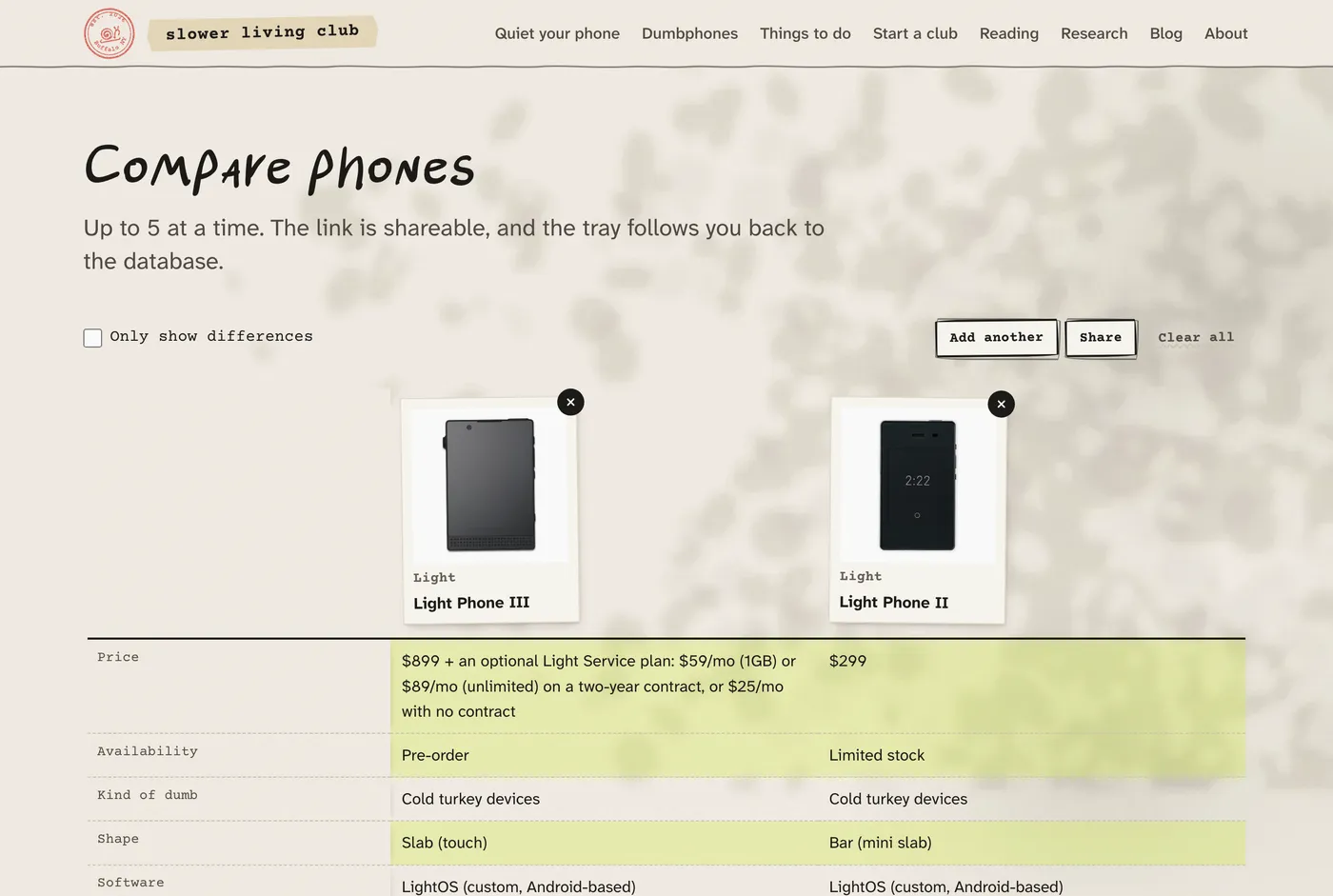
The full side-by-side is on the compare page. Here’s the short version.
| Light Phone III | Light Phone II | |
|---|---|---|
| Screen | 3.92 in OLED | 2.84 in E Ink |
| Camera | Yes | No |
| Battery | 1,800mAh, removable | 950mAh, sealed |
| Network | 4G and 5G | 4G |
| Weight | 124 g | 78 g |
| Water | IP54 | IPX3 |
| Headphone jack | No | Yes |
| Rideshare tool | Yes | No |
| Price, October 2026 | $899 | $299 new (sold out), $175 refurbished |
What stays the same
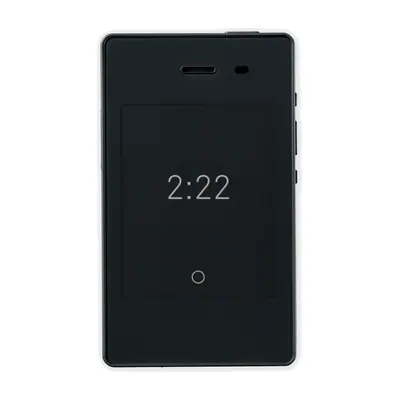
Both run LightOS. Both get their tools from Light’s dashboard website rather than an app store, so you pick what’s on the phone from a computer and that’s that. Neither has a browser, email, WhatsApp or anything else with a feed. Both do calls, texts and group texts, podcasts and music, built-in directions, and a hotspot for the laptop.
That shared core is the reason to buy either one. The difference between them is in the hardware, and in how much the hardware costs.
What the extra money buys
A screen you can type on
The II’s screen is 2.84 inches of e-ink. It’s lovely to look at in daylight and it’s slow. Typing a long text on it felt like writing with mittens on, and I learned to keep my texts short, which, to be fair, was sort of the idea. I wrote more about living with it in a year with the Light Phone II.
The III’s screen is a 3.92-inch OLED. Engadget’s reviewer found the wider display made typing easier than on the previous model, and also found there’s no autocorrect, so sending a message still took noticeably longer than on a smartphone. If texting is most of what you do with a phone, that’s the single biggest reason to pay for the III.
A camera
The II has no camera. That was half the point for me. I switched because I’d noticed I was photographing my kids more than I was looking at them, and a phone that couldn’t take a picture took care of that. I picked up a 35mm point-and-shoot not long after, which is its own story, in shooting film without a phone camera.
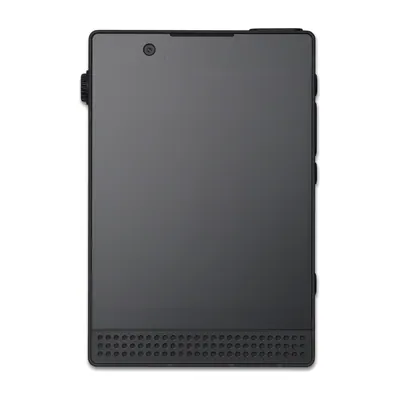
The III has one, with a 50MP sensor on the back and an 8MP one on the front, per TechCrunch. Engadget found photos decent in good light, with a lag of one to three seconds between pressing the shutter and the phone taking the picture. That’s a camera for a parking spot or a note to yourself. Whether you count that as a feature or a leak depends on why you’re doing this.
A battery you can replace
The II has a 950mAh battery, and it’s sealed in. A battery you can’t swap is the part of an old phone that ages worst. The III has 1,800mAh, and you can take it out. Engadget’s reviewer got multiple days out of it unless he leaned on navigation. There’s no battery life figure in the database for either phone, so I won’t guess one.
The scroll wheel, and the rest
The III has a scroll wheel on the side that sets the screen brightness, around a flashlight button that Engadget’s reviewer found easy to press by accident. It adds 5G, an IP54 rating against the II’s IPX3, and a Rideshare tool that books an Uber or a Lyft without either app on the phone. Ride-share is the thing I miss most without a smartphone, so that last one gets my attention more than the camera does.
Two things on the III are still waiting on software. The fingerprint reader is switched off in LightOS, and the NFC chip is waiting on a wallet Light hasn’t shipped. And the III drops the headphone jack the II has, which matters if you run with wired earbuds.
The carriers are the same, and so are the gaps
Light lists AT&T, T-Mobile and Verizon for both phones in the US, but on Verizon only postpaid lines count, with no prepaid and no NumberShare. Mint, Ting, US Mobile (on its Light Speed plan, for the III) and Light’s own plan work too, and the III adds Noble Mobile. Google Fi, Cricket, Metro, Spectrum, Xfinity, Straight Talk, Tracfone and most other prepaid carriers are out for both.
On the II, the APN can’t be edited, which matters on some prepaid carriers. If you’re on one of the carriers that’s out, neither phone is for you without moving your number first. The carrier guide goes through this carrier by carrier.
The Light Flip, if you want keys
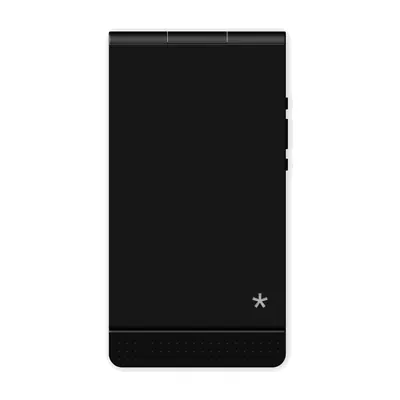
There’s a third option, and it isn’t out yet. The Light Flip is $349 outright on pre-order, up from $299 at launch, or $39 a month with a two-year Light Service plan. Light’s store says the first two batches, shipping April and late April 2027, are sold out, and the next ones ship in May 2027.
On paper it’s a 2.8-inch OLED flip with T9 keys, a camera, a removable 1,800mAh battery, a headphone jack and IP54. Light says it will be certified with the FCC and the major US carriers before it ships, and whether it supports VoLTE is still unknown, so none of this is confirmed by hardware yet. It’s also the first Light phone with a developer program for community-built tools.
If physical keys matter more to you than anything on the III, I’d wait for reviews of the Flip. If you can’t wait until 2027, a refurbished II will tide you over for less than the Flip’s price.
Which one, by the kind of person you are
| If you | Get |
|---|---|
| Have never used a dumbphone | Neither yet. A $50 keypad phone for a weekend first |
| Want to stop photographing everything | The II |
| Text a lot | The III, for the bigger screen |
| Call a lot of rides | The III, for the Rideshare tool |
| Run with wired earbuds | The II, at 78 grams with a headphone jack |
| Want real keys | The Light Flip, once the reviews are in |
| Don’t mind the price | The III |
| Are on Cricket, Metro, Visible, Google Fi or prepaid Verizon | Neither, unless you switch carriers |

If you haven’t tried any of this yet, start cheap. The cheapest way to try a dumbphone is a $50 keypad phone and a weekend, and it answers most of the question before you spend Light money.
About the running row: the II will play music through its headphone jack, but my first weeks on it were long runs with no music anyway, and that turned into one of the better parts of the switch, which I wrote about in in praise of boredom.
I’d buy most people the refurbished II. It’s the phone that got me to put the smartphone down in the first place, and for $175 it still does that job.
Questions people ask
- Is the Light Phone III worth $899?
- For most people, no. The Light Phone II does the same core jobs for $175 refurbished, and the extra money mostly buys a camera, a larger OLED screen and a removable battery. If you want a camera and directions on one small phone with no apps, and the price doesn't sting, the III is the one to get.
- Is the Light Phone II discontinued?
- No. Light says it has no plans to stop making or supporting it, and lists it at $299 new. Both colors were sold out on Light's store in September 2026, while refurbished units were in stock at $175 with a one-year warranty, in North America only.
- Does the Light Phone III have a camera?
- Yes, and the Light Phone II doesn't. Engadget's reviewer found the III's camera took one to three seconds to fire after pressing the shutter, so think of it as a camera for notes and the odd snapshot.
- Can the Light Phone III or II run WhatsApp?
- No. Neither phone runs WhatsApp, Signal or any other messaging app, and Light has no tool for them. Calls and ordinary texts, including group texts, are what you get.
- What carriers work with the Light Phone?
- In the US, Light lists AT&T, T-Mobile and postpaid Verizon for both phones, along with Mint, Ting, US Mobile and its own Light plan. Verizon prepaid, NumberShare, Cricket, Metro, Google Fi, Straight Talk and most other prepaid carriers are not supported.
The phones in this post
compare them side by sideRead next
-
Phones
The best dumbphones of 2026
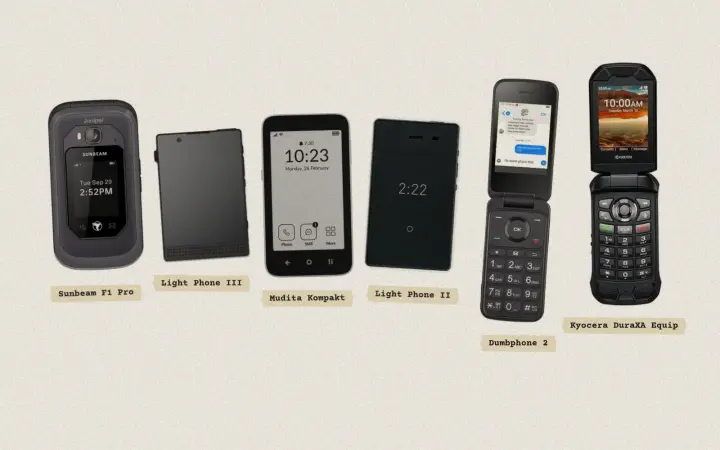
The best dumbphones of 2026 by need, from a $49 keypad phone to the $899 Light Phone III, checked by hand and picked by someone who's lived with eight of them.
-
Phones
E-ink phones compared
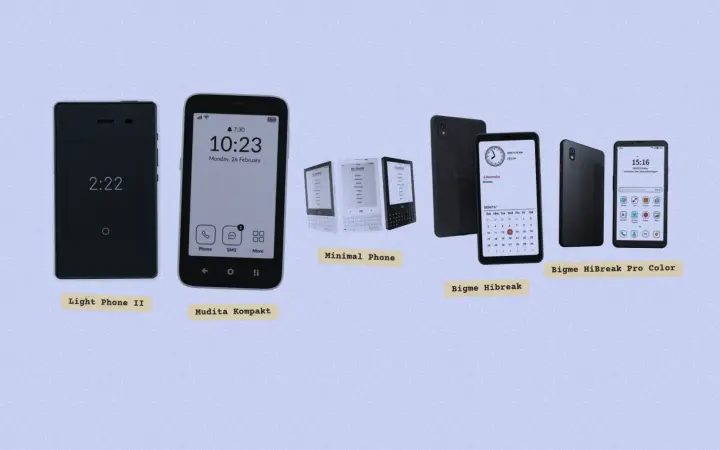
Every e-ink phone in the database compared, from the Light Phone II to the Bigme HiBreak Pro, and what e-ink is good and bad at, from someone who's used four.
-

Phones
Small phones for writers, photographers, musicians and designers
Which small phones suit writers, photographers, musicians and visual artists, from e-ink and keyboards to no camera at all, with prices as of November 2026.